Every day, billions of photos and videos are captured by cameras and transferred into feeds, product pages, and presentations. Increasingly, the most compelling visuals never touch a camera sensor. They start as an idea – a sentence, sketch, or mood – and are rendered in seconds by a model. At Northzone, we believe these generative image and video models are becoming part of the infrastructure of the internet: the layer that will power how brands communicate, products are presented, films are made, and how consumers express themselves creatively.
Black Forest Labs – a frontier AI research lab for visual intelligence, and the team behind the FLUX family of models – is one of the defining companies in this space.
From research labs to Black Forest Labs
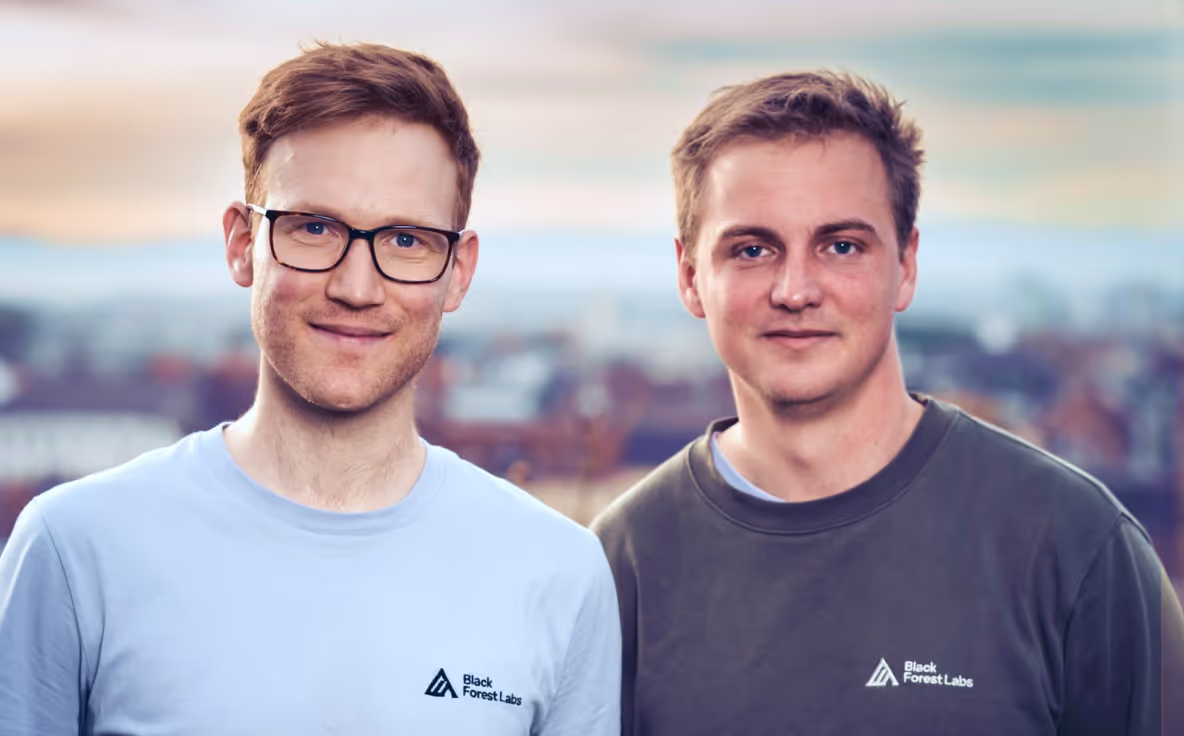
The three co-founders, Robin Rombach, Andreas Blattmann, and Patrick Esser, are researchers at heart, with a shared, longstanding passion for the intersection of visual media and AI that spans their time in academia. Before founding Black Forest Labs, the trio spent years in top-tier university research labs such as LMU Munich and Heidelberg University. There, the team developed a series of models and techniques – including latent diffusion and stable diffusion – which became core research contributions that made high-quality text-to-image generation as we know it today possible and accessible.
Collectively, their papers on generative image and video models have been cited more than 120,000 times – a reflection of how widely their work is referenced and built upon by other researchers, open-source communities, and companies.
With Black Forest Labs, Robin, Patrick, and Andreas set out to build an independent, research-first company fully dedicated to visual intelligence, headquartered in Freiburg, Germany, with teams in San Francisco and London. Their ambition is straightforward and bold: to be the lab that defines the state of the art in images and video, and makes it accessible to the world.
Meeting the team behind FLUX
When FLUX.1 launched in Summer 2024, it became clear to us that something special was happening. The open-weight dev models quickly rose to the top on Hugging Face and GitHub and became hugely popular in the developer community. At this point, we travelled to Freiburg to spend time with the Black Forest Labs team.
What stood out to us in our interactions was not only the team’s research caliber, but also their deep obsession with model quality and reliability, coupled with a genuine commitment to the developer community and a clear understanding of how to productize frontier research into new model releases at scale that are in tune with what enterprises need.
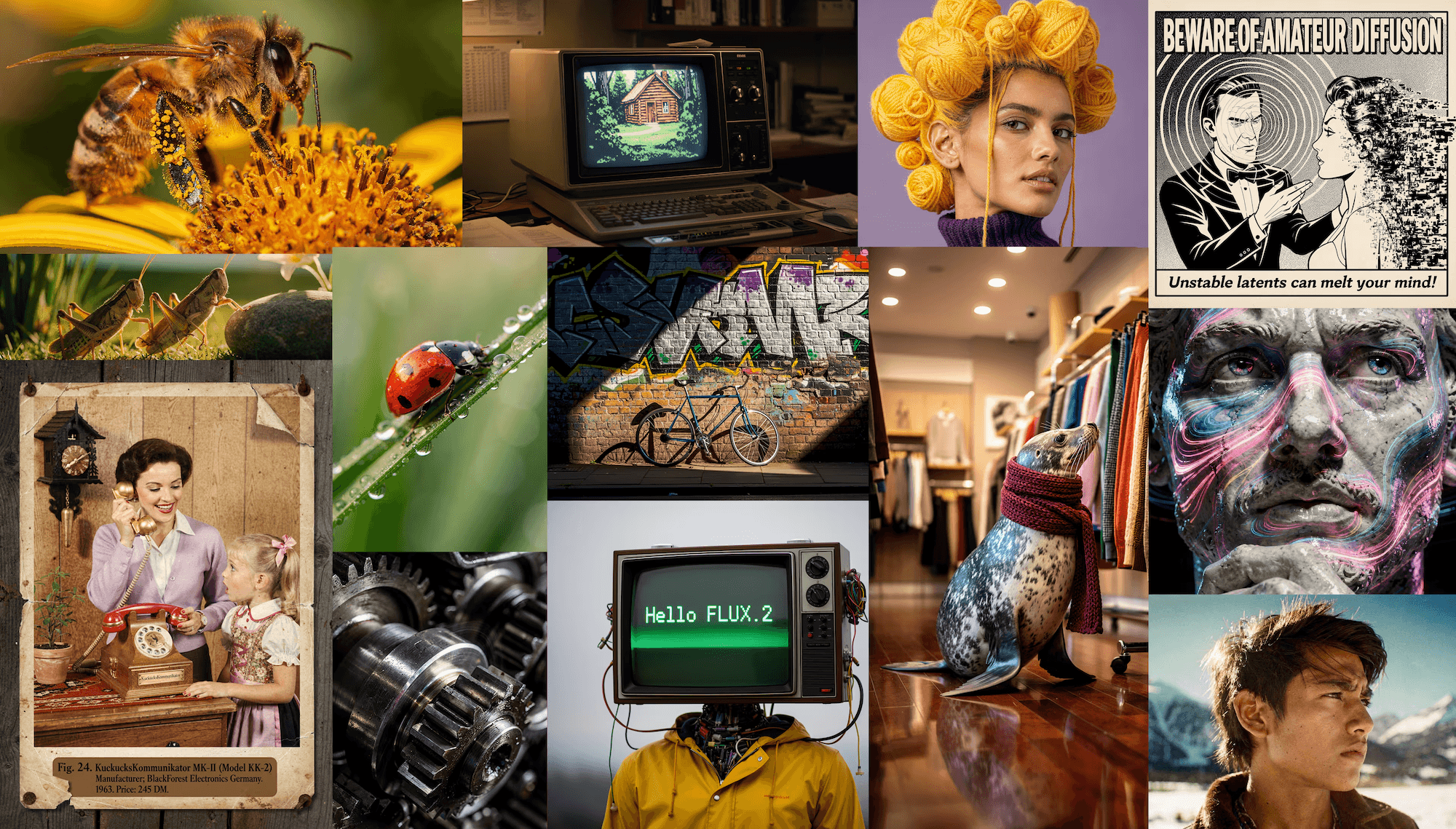
Image and video as the next great primitives
We believe that image and video generation are becoming new computing primitives. As visual intelligence matures as a category, we see a whole new horizon of use cases and applications emerging that leverage this technology. We imagine a world in which brands generate hundreds of on-brand product visuals from a single photoshoot; where film studios iterate scenes, worlds, and storyboards overnight; and where consumers watch entirely new entertainment formats where shows, ads, and experiences are uniquely generated for each viewer.
From our conversations with marketing leaders and creative directors, the use of generative media is clearly proliferating and moving from experimentation to real deployment. Large marketing groups are already spending meaningful sums each year on image and video models, and many brands now expect AI to be part of every major project. It’s clear that the innovations the BFL team is working on are precisely what’s needed to move this space forward.
We’re proud to have been early believers in Black Forest Labs at Series A, and now we’re doubling down in their $300m Series B led by AMP and Salesforce Ventures, with significant contributions from their existing investors. This fresh funding will drive the launch of FLUX.2, a further breakthrough in high-performance, openly available visual intelligence systems. This lays the groundwork for a multimodal intelligence system that combines vision, reasoning, and memory – the foundation for the next era of human-AI creativity. We’re grateful to be on the journey with Robin, Andreas, Patrick, and the team as they push the frontier of visual intelligence – and we’re excited to keep walking into the new together.